
If your risk is a competitor or a scraper
A jurisdiction buys you nothing. Rate limiting, a CDN and a firewall do the whole job, and every one of them works from wherever your server already is.
Including the guide that tells you not to buy this. A provider publishing only reasons to buy is not writing guides, it is writing advertising with paragraphs.
Showing 1–12 of 13 guides.
 Moving a live site to a host you cannot ask for help
Nothing you install makes a migration seamless. What makes it bounded is an order of operations, and three of its steps happen days before you copy a single byte. Here is the sequence, the clock you do not control, and the honest arithmetic of the one window you cannot avoid.
18 min
updated 23 days ago
Moving a live site to a host you cannot ask for help
Nothing you install makes a migration seamless. What makes it bounded is an order of operations, and three of its steps happen days before you copy a single byte. Here is the sequence, the clock you do not control, and the honest arithmetic of the one window you cannot avoid.
18 min
updated 23 days ago
 No KYC, and the seven records that still name you
Not collecting your passport is a true statement about one company’s filing cabinet. Being unidentifiable is a property of a chain — seven separate holders, each with one link, most of them under laws your host has never heard of. Here is who holds what, what it costs to join two of them, and which link you are most likely to break yourself.
17 min
updated 25 days ago
No KYC, and the seven records that still name you
Not collecting your passport is a true statement about one company’s filing cabinet. Being unidentifiable is a property of a chain — seven separate holders, each with one link, most of them under laws your host has never heard of. Here is who holds what, what it costs to join two of them, and which link you are most likely to break yourself.
17 min
updated 25 days ago
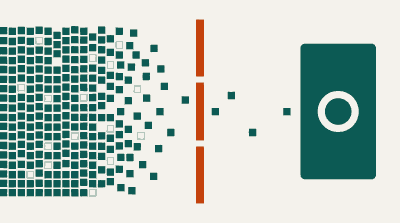 What a DDoS does to your server, and to your host
Two completely different attacks share one word, and only one of them can be filtered by somebody who is not reading your traffic. What your provider’s first move actually is when the packets arrive, why the industry default finishes the attack rather than stopping it, and the six things worth deciding beforehand.
17 min
updated 1 month ago
What a DDoS does to your server, and to your host
Two completely different attacks share one word, and only one of them can be filtered by somebody who is not reading your traffic. What your provider’s first move actually is when the packets arrive, why the industry default finishes the attack rather than stopping it, and the six things worth deciding beforehand.
17 min
updated 1 month ago
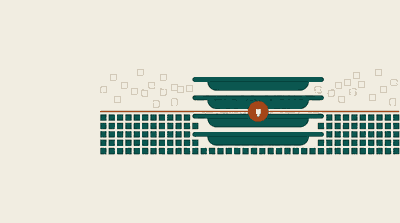 Disk encryption on a machine you do not own
Full-disk encryption protects a disk that leaves the building. It does not protect a machine that is running, because the key is sitting in memory the hypervisor can address — and the two kinds of encryption sold under the same four words differ only in who holds that key.
15 min
updated 2 months ago
Disk encryption on a machine you do not own
Full-disk encryption protects a disk that leaves the building. It does not protect a machine that is running, because the key is sitting in memory the hypervisor can address — and the two kinds of encryption sold under the same four words differ only in who holds that key.
15 min
updated 2 months ago
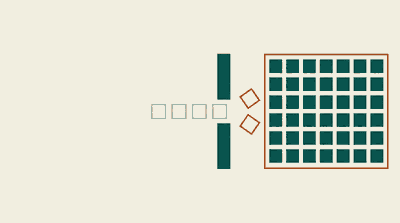 The reputation of an address you did not choose
The address you rent carries a history you did not write, and blocklists judge the range rather than the address. What each of the six judges actually blocks, why mail is the harshest and the only honest one, and the single decision that matters more than every DNS record put together.
15 min
updated 2 months ago
The reputation of an address you did not choose
The address you rent carries a history you did not write, and blocklists judge the range rather than the address. What each of the six judges actually blocks, why mail is the harshest and the only honest one, and the single decision that matters more than every DNS record put together.
15 min
updated 2 months ago
 Bulletproof hosting, and what the words actually mean
Four words are used as if they were one: bulletproof, offshore, DMCA-ignored, DMCA-free. Three of them describe something real and different, and one of them describes nothing at all.
9 min
updated 2 months ago
Bulletproof hosting, and what the words actually mean
Four words are used as if they were one: bulletproof, offshore, DMCA-ignored, DMCA-free. Three of them describe something real and different, and one of them describes nothing at all.
9 min
updated 2 months ago
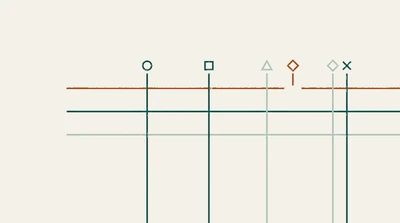 The layers above your server: domain, CDN, transit
Your host is one layer out of three. The registry above you can pull your name out of the zone file on one court order, the proxy in front of you forwards every complaint to your host with your origin address attached, and neither of them sits in your host’s jurisdiction.
16 min
updated 2 months ago
The layers above your server: domain, CDN, transit
Your host is one layer out of three. The registry above you can pull your name out of the zone file on one court order, the proxy in front of you forwards every complaint to your host with your origin address attached, and neither of them sits in your host’s jurisdiction.
16 min
updated 2 months ago
 DMCA, DSA and the e-Commerce Directive, compared
Three instruments, three different triggers, and which of them can reach a host outside their territory. Written for someone who has received a notice and wants to know what it obliges.
17 min
updated 2 months ago
DMCA, DSA and the e-Commerce Directive, compared
Three instruments, three different triggers, and which of them can reach a host outside their territory. Written for someone who has received a notice and wants to know what it obliges.
17 min
updated 2 months ago
 Paying for infrastructure in crypto, practically
Which chains cost least in fees, what happens when you send to the wrong one, and why the odd decimals on an invoice are a feature rather than an accident.
9 min
updated 2 months ago
Paying for infrastructure in crypto, practically
Which chains cost least in fees, what happens when you send to the wrong one, and why the odd decimals on an invoice are a feature rather than an accident.
9 min
updated 2 months ago
 How to read a jurisdiction before you trust it
Six questions to ask about any country a host claims to be in — treaty membership, retention mandates, takedown statutes, and whether the provider owns anything there at all.
11 min
updated 2 months ago
How to read a jurisdiction before you trust it
Six questions to ask about any country a host claims to be in — treaty membership, retention mandates, takedown statutes, and whether the provider owns anything there at all.
11 min
updated 2 months ago
 Threat modelling for a small platform
Who might actually come after your service, in what order, and which of them a hosting decision affects. Most of them it does not — and knowing which is the point.
13 min
updated 2 months ago
Threat modelling for a small platform
Who might actually come after your service, in what order, and which of them a hosting decision affects. Most of them it does not — and knowing which is the point.
13 min
updated 2 months ago
 What offshore hosting actually protects you from
And the four things people assume it covers that it does not. The distinction almost every provider blurs is the one that decides whether this is worth buying.
14 min
updated 2 months ago
What offshore hosting actually protects you from
And the four things people assume it covers that it does not. The distinction almost every provider blurs is the one that decides whether this is worth buying.
14 min
updated 2 months ago
Nothing here is sponsored, nothing links to an affiliate, and no guide has a call to action wedged into the middle of it. If one of them concludes that you do not need us, that is the conclusion it prints.
Read this one first
It is the one worth your time before any of the others. Most people arriving on a site like this are solving a problem a jurisdiction change does not touch — and finding that out costs seven minutes rather than a year of latency.
If your risk is a competitor or a scraper
A jurisdiction buys you nothing. Rate limiting, a CDN and a firewall do the whole job, and every one of them works from wherever your server already is.
If your users are all in one country
That country’s law still reaches you wherever the machine sits. Hosting abroad changes who can compel the machine, not who can come after its owner — and that distinction is the whole subject.
If you have never received a notice
Move when you have a reason, not in advance. There is no lock-in here and no minimum term precisely because we would rather you arrive with a real problem than a vague worry.
If the subject interests you
Not a summary of what applies to us — the actual list, with what each one says and why it does or does not reach a host in Moldova.